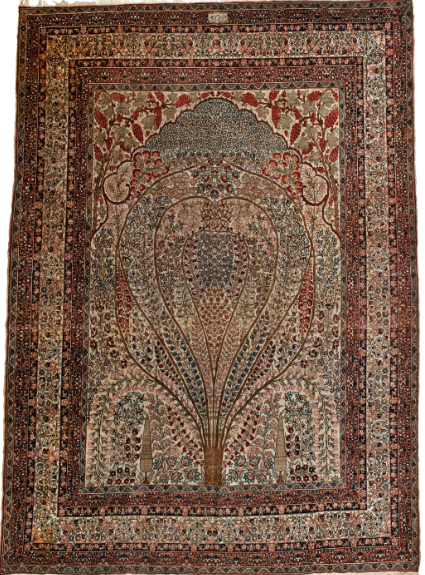
Tehran rugs originate from the bustling capital city of Tehran in northern Iran. As a city of political power, cultural exchange, and artistic ambition, Tehran developed a distinct reputation for producing Persian rugs that reflect both traditional craftsmanship and contemporary influence. Unlike older provincial weaving centers, Tehran’s rug identity emerged later, shaped by elite patronage and exposure to diverse regional styles.
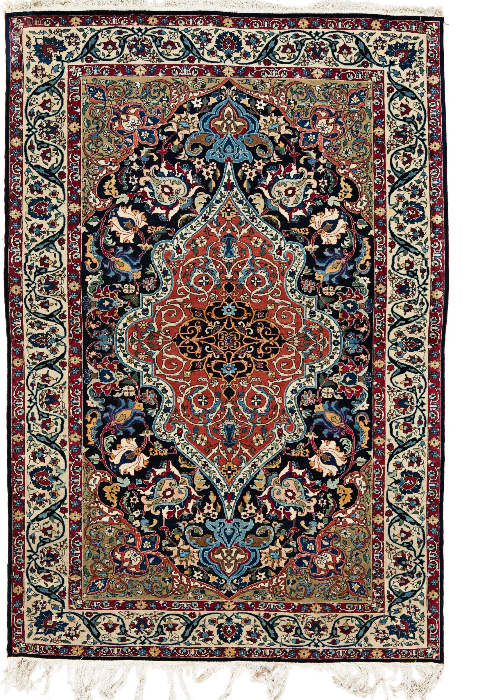
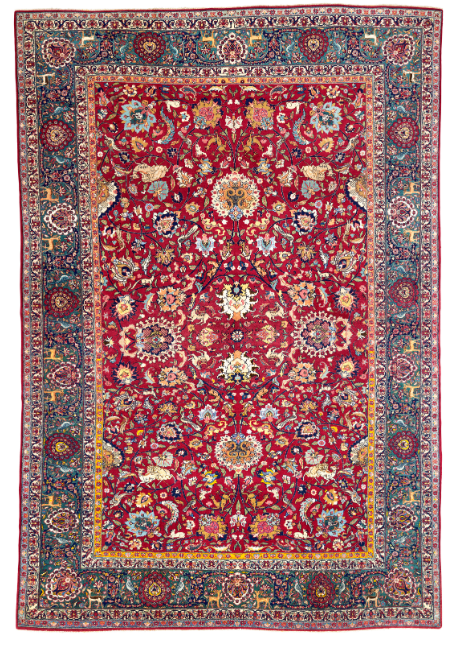
Tehran rugs are distinguished by designs that balance classical Persian motifs with a more modern visual sensibility.
Common design elements include:
These compositions are executed with precision and supported by a rich color palette that often includes:
The result is a refined aesthetic that feels both rooted in tradition and visually adaptable.
Each Tehran rug is handcrafted with meticulous care, using high-quality materials selected for both beauty and longevity.
Materials commonly used:
Silk is frequently incorporated to enhance detailing and impart a luxurious sheen. The rugs are traditionally hand-knotted using the Persian knot, producing a dense, durable pile that balances elegance with practical strength.
Tehran rugs were produced in a wide range of formats to suit diverse interiors.
They appear as:
Common shapes include rectangular and square formats, with occasional round examples made to accommodate specific architectural spaces.
Tehran rugs are highly regarded for their exceptional craftsmanship and distinctive visual identity. Collectors and connoisseurs prize them for their precision, material quality, and design balance.
Their fusion of traditional Persian elements with evolving artistic trends has positioned Tehran rugs as valuable investment pieces, reflecting both heritage and adaptation within Persian rug making.
Tehran rugs form an integral part of Iran’s cultural fabric. They embody a dialogue between historical craftsmanship and modern innovation, mirroring the city itself.
As expressions of Tehran’s dynamic character, these carpets preserve Persian artistic traditions while responding to the cultural evolution of the capital.
Over time, Tehran rugs evolved to incorporate modern influences without abandoning classical foundations.
While traditional motifs remain prominent, later examples often display:
This evolution demonstrates Tehran’s ability to adapt its rug-making heritage to contemporary tastes while maintaining artistic integrity.
Tehran became the capital of Iran in 1796, yet its rise as a carpet-producing center was initially constrained. Limited grazing lands restricted access to wool, making carpet weaving uncommon in the city’s early years.
This changed in the late 19th and early 20th centuries, when Tehran’s aristocracy began demanding luxurious, finely crafted carpets for palaces and private residences. The surge in elite demand led to the rapid establishment of workshops throughout the city.
To meet these expectations, master weavers were brought from established centers such as:
Kirman
Kashan
Isfahan
Their task was to elevate Tehran’s production to rival, and in some cases surpass, other Persian weaving regions.
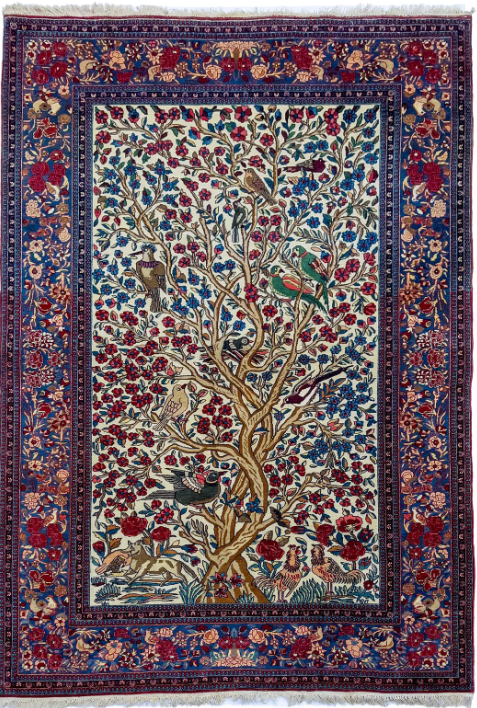
One notable example is the Bijar Garrus design, closely associated with the Garrus region. Its popularity in Tehran was strengthened by the influence of the governor of Garrus and commander of the Qajar armies, whose patronage made the design a staple of royal looms.
Tehran’s emergence as a weaving center illustrates how aristocratic patronage shaped both its artistic direction and its place within Persian carpet history. By integrating techniques and aesthetics from across Iran, Tehran developed a distinct identity within the grand Persian tradition.
Tehran carpets share visual similarities with those from Veramin, Semnan, and Senneh, reflecting geographic proximity and shared influences. Their artistry is celebrated for intricate detailing, often featuring:
Tree of Life compositions
Vase motifs
Animal depictions
Curvilinear floral patterns
These elements are executed with high technical precision, giving Tehran rugs both visual depth and structural clarity.
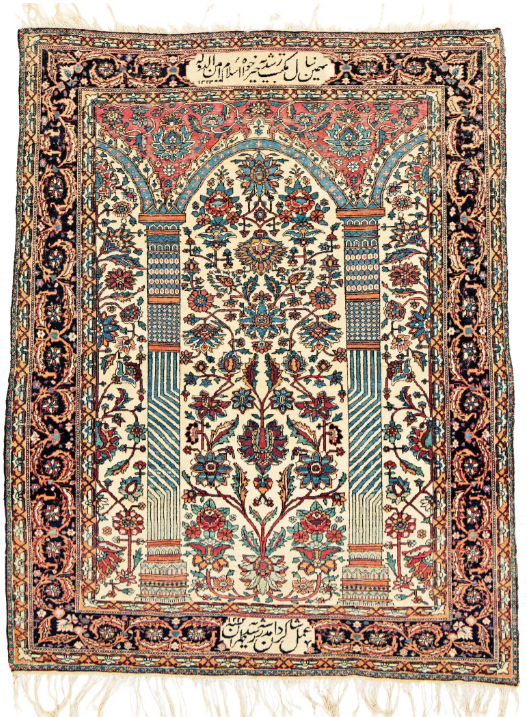
A distinctive subgroup closely resembles Isfahan carpets, making attribution challenging. Subtle identifiers include:
More frequent use of violet hues
Slight differences in weave tightness and texture
Careful examination of structure and dye composition allows experienced collectors to distinguish between the two.
What ultimately defines Tehran carpets is their masterful synthesis of classical Persian motifs and localized artistic expression, securing their place in both historical and modern collections worldwide.
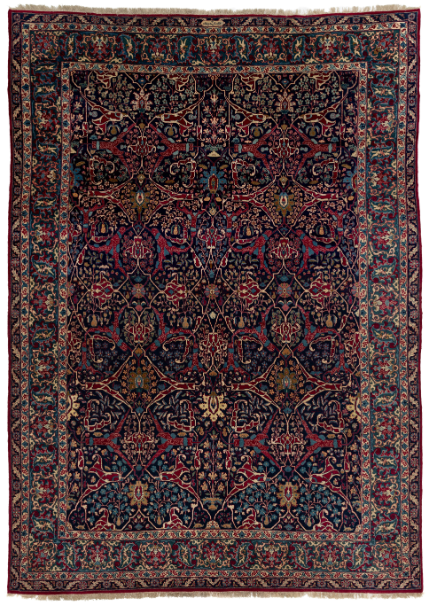
Tehran rugs were woven in limited quantities, making surviving examples exceptionally rare today. Only the finest pieces remain in circulation, and when they appear, they command premium prices.
Their desirability stems from:
Precision craftsmanship
Intricate drawing
Exceptional design clarity
Design characteristics often include:
Elegant curvilinear floral motifs
Garden of Paradise compositions
Birds, gazelles, leopards, and vases
Symbolic Tree of Life imagery
A defining feature is the harmonious color palette, frequently enriched by a distinctive violet-red hue that becomes increasingly luminous with age.
This combination of rarity, artistic mastery, and chromatic sophistication ensures that Tehran rugs remain among the most prestigious works in the Persian carpet world
Due to the limited production of Tehran carpets, fewer names achieved widespread recognition compared to Isfahan. Nevertheless, several figures remain significant, including:
Hadad
Haji Muhammad Jafar Farschi
Ismail Salari
Many unsigned carpets from Tehran speak for themselves through quality and design. Silk, often partial and sometimes full, was widely used as a luxury material, commanding high premiums in the market.
A particularly important figure is Seyd Abolfat – Rasam Arabzadeh. Born in 1914 in Tabriz, he was raised in an artistic household where his father introduced him to sculpture, music, poetry, literature, tile design, and calligraphy.
After formal training in design and painting, he sought to transform carpet weaving by integrating philosophy and literature into the medium. His exhibitions redefined how carpets were displayed, presenting them as conceptual works rather than purely decorative objects.
Through this approach, he reshaped a millennia-old craft while preserving its cultural depth.
Rasam Arabzadeh (born 1914, Tabriz) emerged as one of the most unconventional figures in Persian carpet history. Trained as both a weaver and miniature painter, he developed a unique artistic voice despite early hardships, including language barriers and financial difficulty in Tehran.
Rasam became known for breaking away from traditional carpet norms, introducing:
Portraits
Caricatures
Social and political commentary
His work challenged long-standing conventions and initially faced resistance from traditionalists. Recognition followed through exhibitions and the establishment of a workshop in Tehran, where he continued to produce innovative designs.
Rasam Arabzadeh passed away in 1996, leaving behind a legacy defined by creativity, transformation, and artistic courage.