Origins
Nain rugs originate from the city of Nain, located in central Iran. The city is known for its long tradition of rug weaving, dating back several centuries. Nain is highly regarded for producing high-quality Nain rugs that showcase intricate designs and exceptional craftsmanship.
Design
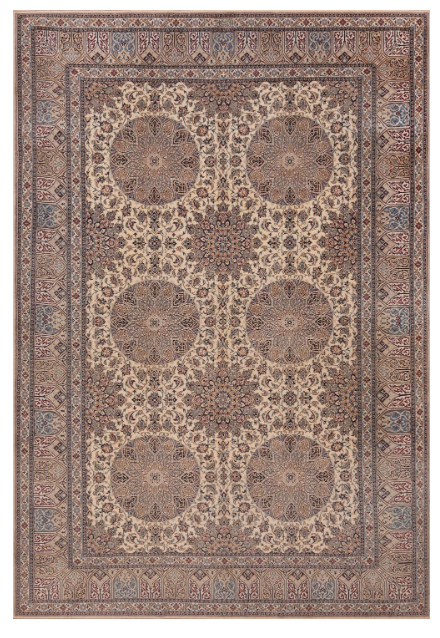
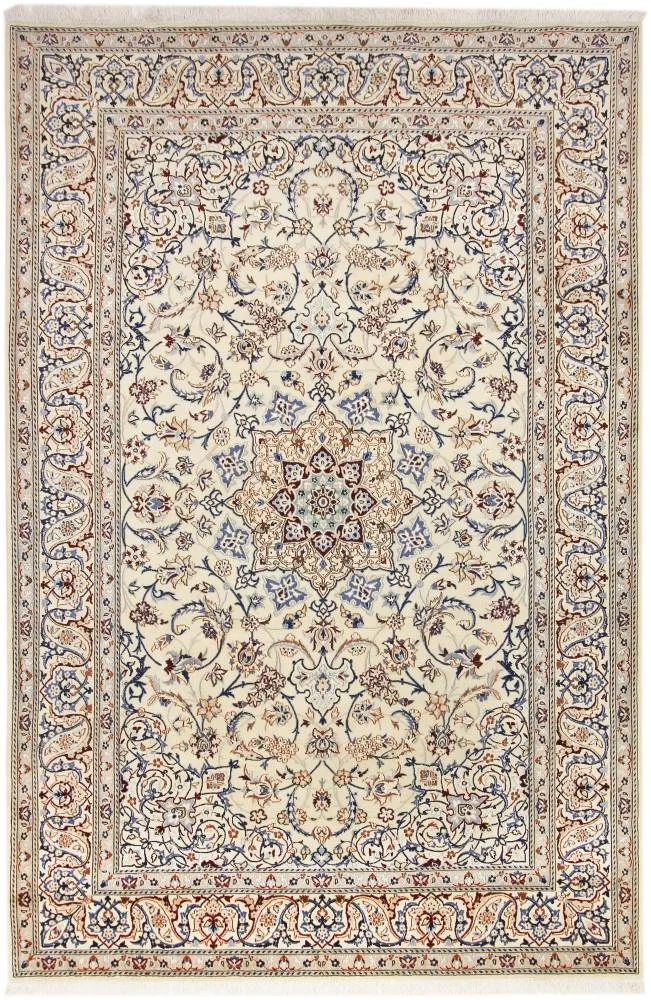
Motifs:Nain rugs are characterized by intricate floral and arabesque motifs, featuring delicate patterns and fine details common to classic Nain design rug traditions.
Color Palette: The designs typically incorporate soft, pastel colors, such as:
– Ivory
– Beige
– Light blue
– Taupe
This creates an elegant and sophisticated aesthetic, making Nain rugs ideal for various interior settings
Construction
Nain rugs are handwoven using the Persian knot technique, which results in a dense and luxurious pile.
They are crafted using high-quality materials, including:
Fine wool
Silk
Cotton
Silk highlights are often used to accentuate intricate details, adding a subtle sheen to the surface of Nain carpets.
Size and Shape
Nain rugs are available in various sizes, from small accent rugs to large room-sized carpets.
Shapes include rectangular, square, and occasionally oval, catering to different design preferences and spatial requirements typical of Nain Persian rugs.
Quality and Collectability
Nain rugs are highly esteemed for their exceptional quality, craftsmanship, and artistic merit.
They are considered among the finest Persian rugs and are prized by collectors and connoisseurs worldwide.
Authentic Nain rugs are valuable investments due to their craftsmanship and enduring popularity in the market.
Cultural Significance
Nain rugs are an integral part of Iran's cultural heritage, representing centuries of weaving tradition and artistic ingenuity.
These rugs are treasured as symbols of Persian artistry and craftsmanship, reflecting the region's history, traditions, and cultural identity preserved through Nain carpets.
Evolution
Over time, Nain rugs have evolved to incorporate modern influences while retaining their traditional elegance.
While classic motifs remain popular, contemporary Nain rugs may feature:
Innovative color palettes
Reinterpretations of traditional patterns
This evolution has helped Nain rugs remain relevant while staying true to their roots.
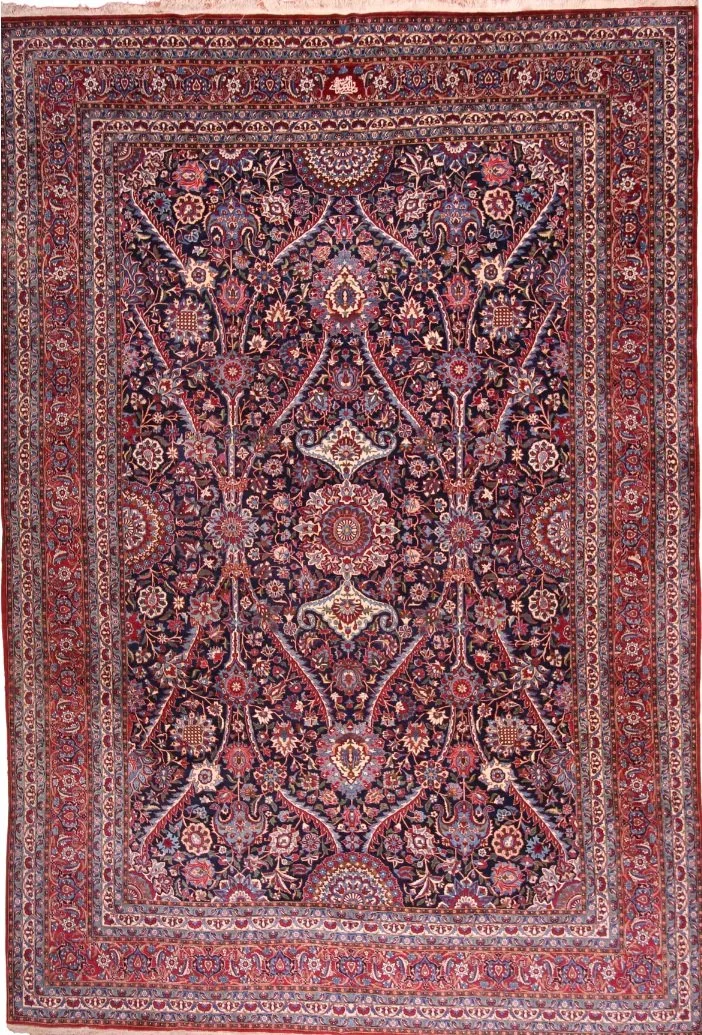
Nain, located about 60 miles east of Isfahan, established itself as a key player in Persian carpet weaving in the early 20th century.
Initially not known for carpet weaving, Nain's proximity to Isfahan influenced the city’s designs and weaving techniques.
Carpet production began in Nain around the 1930s, when local artisans, who once specialized in textiles like woolen fabrics and aba cloaks, shifted to carpet making as demand for traditional textiles declined.
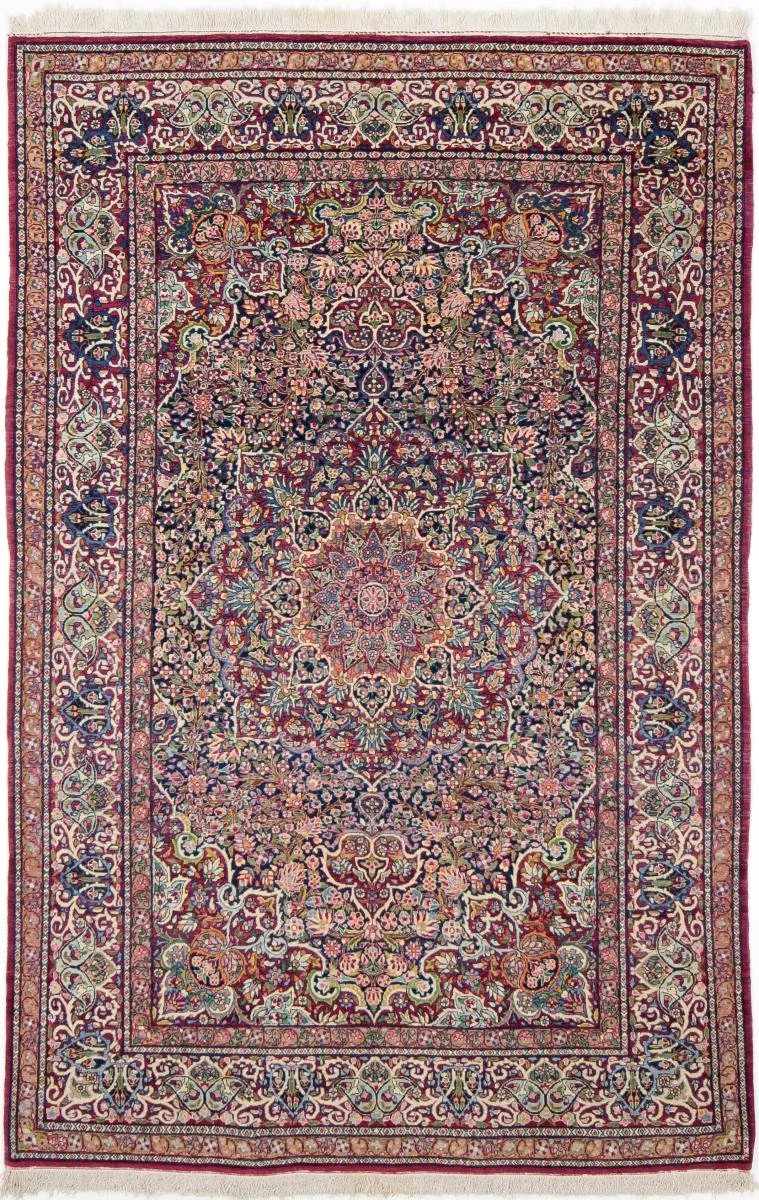
Interestingly, the origins of Nain carpets trace back to Tudeshk, a small town nearby. During the second quarter of the 20th century, Tudeshk became known for producing some of the finest Persian carpets, but after a devastating earthquake in 1957, the weavers migrated to Nain, continuing their craft and establishing Nain as the major center for high-quality Persian carpet production.
A beautiful Nain Tudeshk as an example of early production
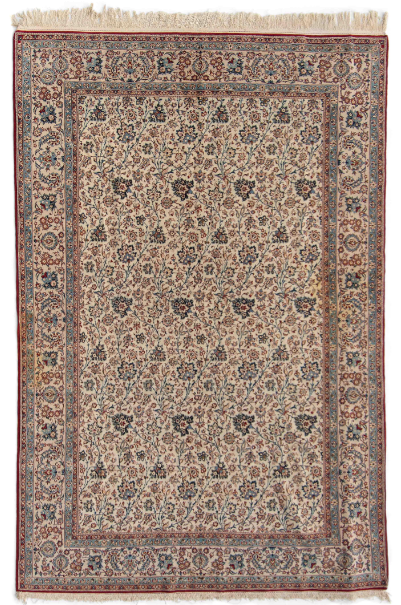
From the outset, Nain carpets were designed to rival Isfahan carpets in terms of intricacy and craftsmanship.
Over time, Nain carpets gained a global reputation for their refined elegance, subtle color schemes, and exceptional quality, cementing their place among the most respected Nain Persian rugs.
Fatollah Habibian, born in 1903, is regarded as the father of Nain carpets.
Fatollah began by weaving overcoats (abayas) before transitioning to carpet weaving in 1920 after taking over his father’s workshop.
He and his brother Mohammad introduced carpets with beige tones in the 1940s, which became synonymous with Nain carpets.
Recognition: Their carpets gained international fame, particularly in London, and remain highly prized by collectors.
The Habibian style became the standard for Nain rugs, influencing many weavers in the region. Fatollah continued his work until his passing in 1994, leaving a lasting legacy in Nain’s carpet-making history.