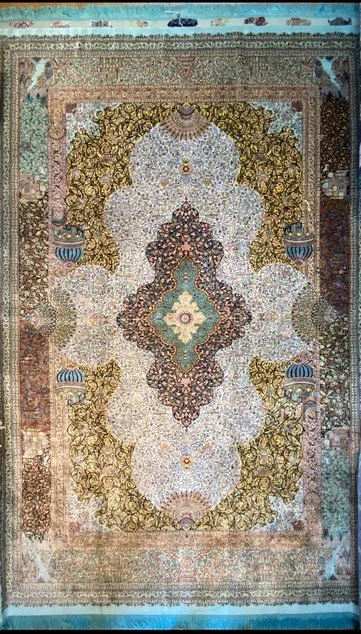
Origins, Design & Construction of Qom Persian Rugs
Qom Persian rugs originate from the city of Qom in central Iran, where rug weaving began in the early 20th century. Despite their relatively recent history, these rugs have gained a reputation for their exceptional quality and intricate craftsmanship.
Qom rugs are characterized by intricate floral motifs, arabesques, and medallions. Their designs feature precise detailing and often use vibrant yet balanced color palettes, including soft pastels like cream and light blue, along with rich reds, golds, and deep blues.
Handcrafted from high-quality silk or a silk-wool blend, Qom carpets are known for their luxurious sheen. They are hand-knotted with a high knot density, using the Persian knot technique, resulting in fine, durable rugs with a smooth, refined texture.
Qom Persian rugs come in a variety of sizes, from small decorative pieces to large carpets. They are available in rectangular, square, and round shapes, offering versatility to suit different spaces and design preferences.
Quality and Collectibility
Qom rugs are highly valued for their fine materials, detailed designs, and expert craftsmanship. Their high knot count and the use of silk make them prized collectibles, sought after by rug connoisseurs and collectors worldwide.
Cultural Significance
Qom Persian rugs represent Iran's rich cultural heritage. Though a more modern weaving tradition, they carry forward the legacy of Persian artistry and craftsmanship, reflecting the region’s cultural and artistic values.
Evolution
Over time, Qom rugs have incorporated modern elements while retaining traditional motifs. Contemporary designs may feature updated color schemes or innovative interpretations of classic patterns to appeal to current tastes.
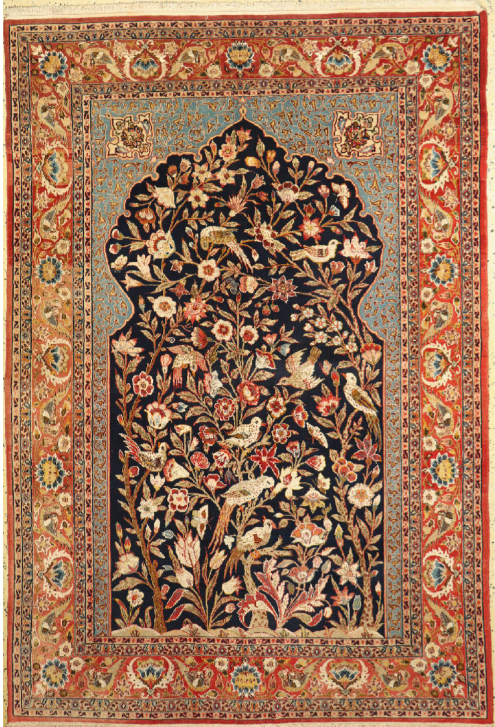
The history of Qom (Qoum) or Ghom carpets is relatively recent compared to other Persian rugs like those from Isfahan or Tabriz. While traditional Persian rug weaving has roots that go back centuries, Qom’s involvement in carpet production began in the early 20th century, around the 1920s. Despite their late start, Qom carpets quickly became renowned for their exceptional quality and intricate designs, establishing a reputation as some of the finest and most valuable Persian rugs available
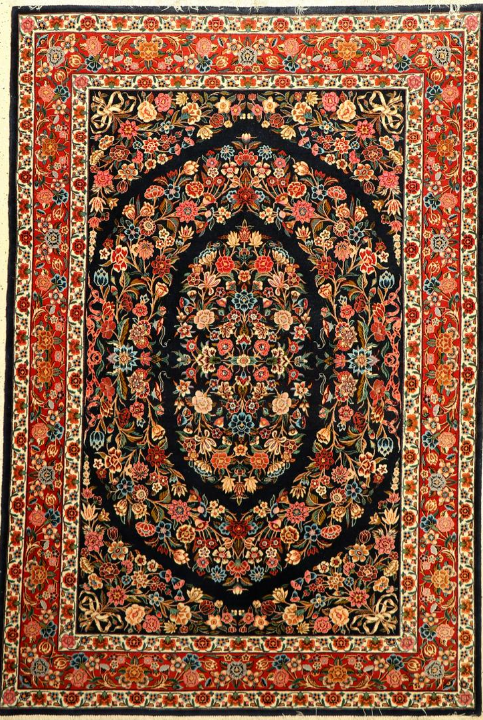
Qom is one of Iran’s religious and cultural centers, but it wasn’t traditionally known for rug weaving. The art of carpet weaving in Qom started as a response to growing demand for luxury items, especially silk rugs, both domestically and abroad. Unlike regions with longer rug-making traditions, Qom weavers didn’t adhere to a single, long-standing style. Instead, they drew inspiration from established patterns in other regions, such as Kashan, Isfahan, and Tabriz.
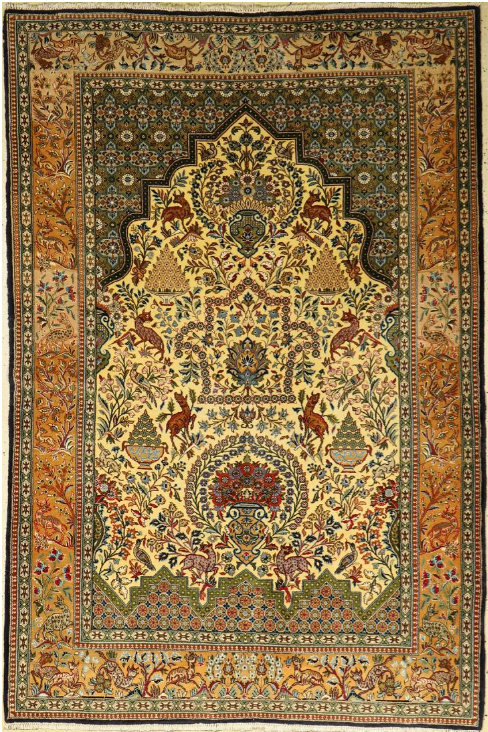
Qom quickly became known for using silk in their carpets, which set them apart from other Persian rugs. The use of silk not only added a luxurious sheen but also enabled more intricate and detailed patterns to be woven due to the fine, thin fibers.
Development of a distinctive style
While early Qom rugs adopted patterns from neighboring cities, the region eventually developed its own distinctive style. Qom rugs often feature traditional Persian motifs, such as floral patterns, arabesques, medallions, and hunting scenes.
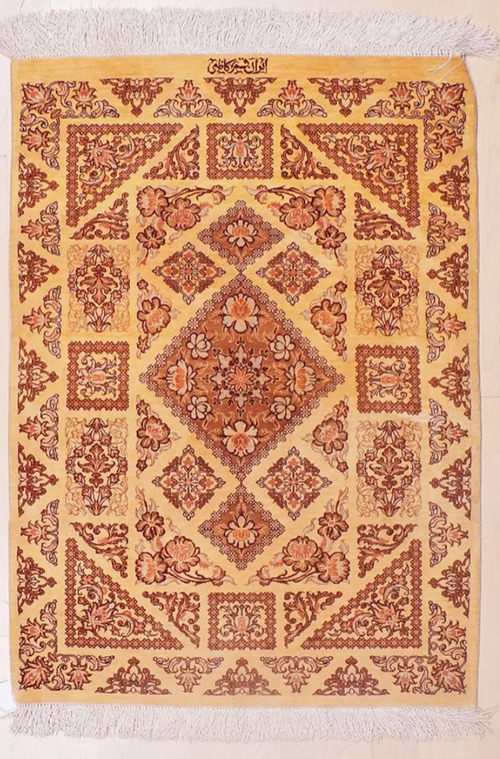
By the mid-20th century, Qom rugs had gained widespread recognition for their fine craftsmanship and artistic value. They became highly sought after by collectors, particularly because of their limited production and emphasis on quality over quantity.
Contemporary innovation
In recent decades, Qom rug makers have continued to innovate, blending traditional designs with contemporary elements to appeal to modern tastes.
Enduring legacy
Overall, despite their short history, Qom carpets have earned a place among the finest Persian rugs.
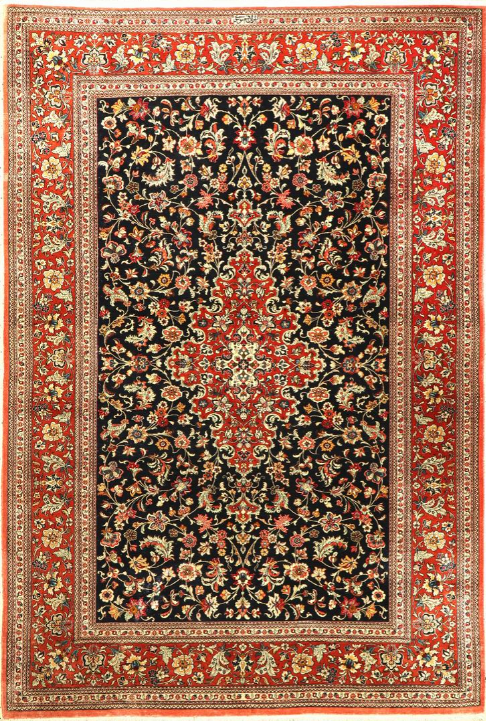
Mohammad Jamshidi is a respected figure in Persian carpet weaving, particularly celebrated for his luxurious Qom silk rugs. These carpets are famous for their fine craftsmanship, detailed designs, and the use of high-grade silk. His rugs have been showcased internationally, including at major auction houses such as Christie’s.