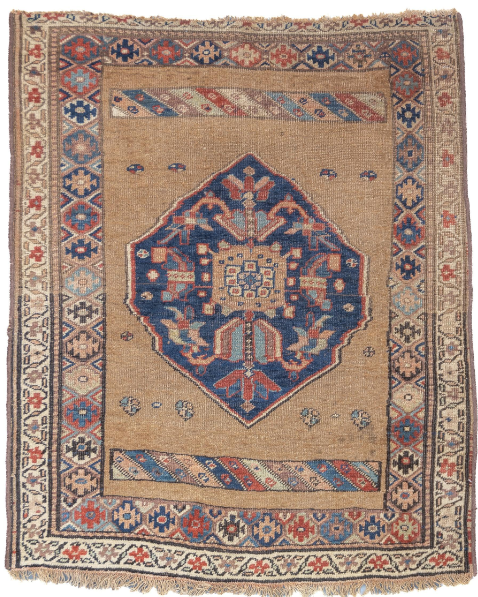
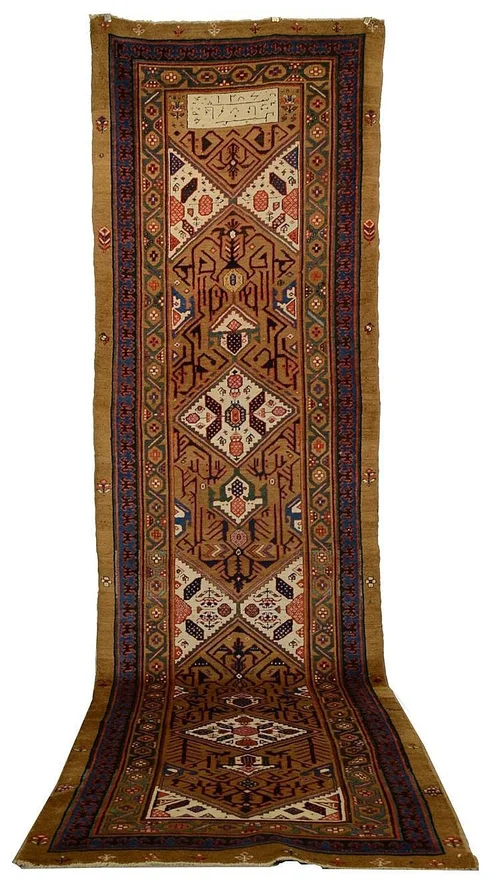
Origins Sarab (or Serab) rugs originate from the village of Sarab in northwestern Iran, a region with a long and continuous tradition of rug weaving. These rugs belong to the wider Heriz family and are known for their durability and practicality, reflecting the rugged landscapes and lifestyles of the area. Design Sarab rugs are defined by geometric composition and bold visual structure. Common characteristics include: Stepped medallions Hooked motifs Large diamond forms Repetitive layouts with rectilinear borders The palette is earthy and restrained, dominated by: Camel tones Soft browns Ivory Dark blues Together, these elements create a natural, grounded aesthetic closely tied to the mountainous environment of the region. Construction Sarab carpets are traditionally handwoven using high-quality wool valued for strength and durability. Key construction features: Cotton foundations (with some older examples using wool) Turkish (symmetric) knot Thick, sturdy pile designed to withstand heavy use This construction makes Sarab rugs suitable for both functional and decorative purposes. Size and Shape Sarab rugs are most commonly: Long and narrow, traditionally used as runners in hallways and staircases They are also produced in: Small accent sizes Larger area rugs Dimensions often reflect the weaver’s intent and the rug’s original use.
Quality and Collectability
Sarab rugs are valued for:
Exceptional durability
Minimalist geometric design
Regional authenticity
Collectors appreciate their rarity within Persian weaving, particularly for those seeking a more rustic or tribal aesthetic distinct from floral carpets.
Cultural Significance
Sarab rugs are rooted in Iran’s rural and nomadic traditions. They embody:
Generational craftsmanship
Practical artistry
The resilience of local weaving communities
Each rug reflects a lived connection between maker, environment, and tradition.
Evolution
While Sarab rugs have preserved their core geometric identity, modern examples may show:
Variations in color scale
Adjustments to proportions for contemporary interiors
Despite these evolutions, Sarab rugs remain firmly anchored to their traditional design language.
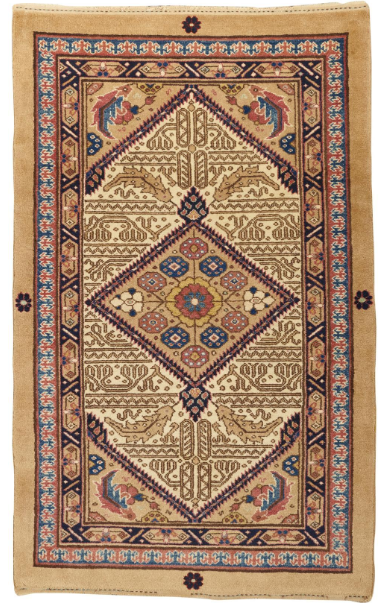
Sarab (often referred to as Serab) rugs are deeply connected to the weaving traditions of northwestern Iran, particularly the village of Sarab in East Azerbaijan Province. As part of the broader Heriz rug family, their history reflects nomadic and rural lifestyles shaped by rugged terrain.
The tradition likely dates back to the Safavid Dynasty (16th–18th centuries), a period when Persian rug weaving flourished under royal patronage. Early Sarab rugs were woven primarily for practical use—providing warmth, comfort, and decoration for homes and tents.
Local conditions shaped production:
Wool sourced from regional sheep, prized for durability
Natural dyes derived from plants, roots, and minerals
Isolated rural weaving environments
These factors tied Sarab rugs visually and materially to their landscape.
Design Identity
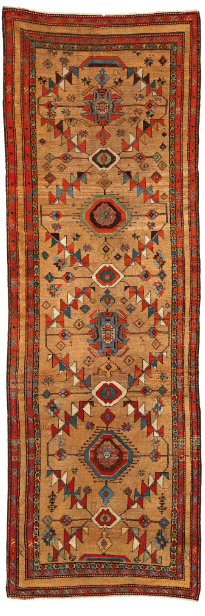
Unlike curvilinear floral Persian rugs, Sarab rugs emphasize angular geometry, influenced by nomadic loom traditions where straight lines were more practical to execute.
Typical features include:
Large stepped medallions
Diamond and hooked motifs
Repetitive, symmetrical layouts
The color palette remained muted and earthy, with camel hair occasionally used to produce characteristic soft brown tones.
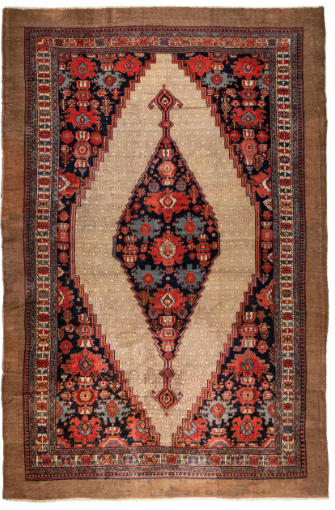
During the 19th century, increased Western demand for Persian rugs expanded production in the Sarab region. While urban centers such as Tabriz focused on intricate export designs, Sarab weavers maintained their geometric tradition.
Key developments:
Strong demand for long runners in Europe and the United States
Recognition for durability and understated design
Continued appeal despite rustic appearance
In the mid-20th century, modernization brought changes:
Some variation in color and scale
Decline of nomadic lifestyles
Greater urban settlement of weavers
Even so, Sarab rugs retained their defining characteristics.
Sarab rugs are cultural artifacts as much as functional textiles. Their:
Geometric patterns
Dense weave
Strong wool construction
allowed them to endure daily life in nomadic homes while preserving artistic expression. Despite evolving markets and techniques, Sarab rugs remain faithful to their tribal origins.
This combination of heritage, craftsmanship, and durability secures Sarab rugs a unique place within Persian carpet tradition—valued worldwide as both utilitarian works and enduring expressions of regional artistry.