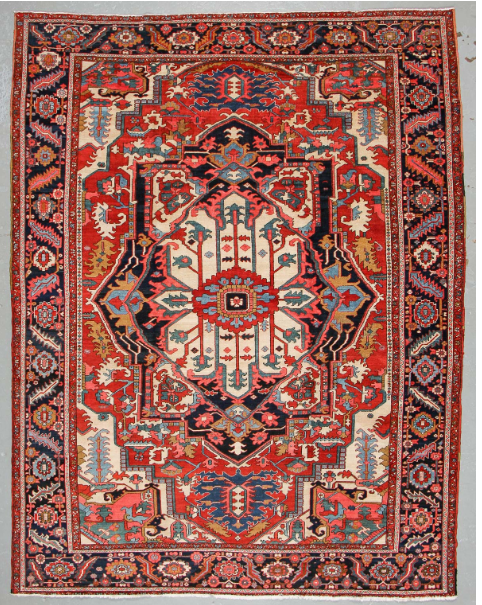
Serapi rugs originate from the region surrounding the town of Heriz in northwestern Iran. This area, known for its rich tradition of rug weaving, has produced Serapi carpets that are celebrated for their unique aesthetic and robust craftsmanship. The creation of Serapi rugs dates back to the 19th century, when they became renowned for their distinctive style and quality.
Historically, many collectors specifically seek a Persian Serapi rug for its balance of strength and elegance.
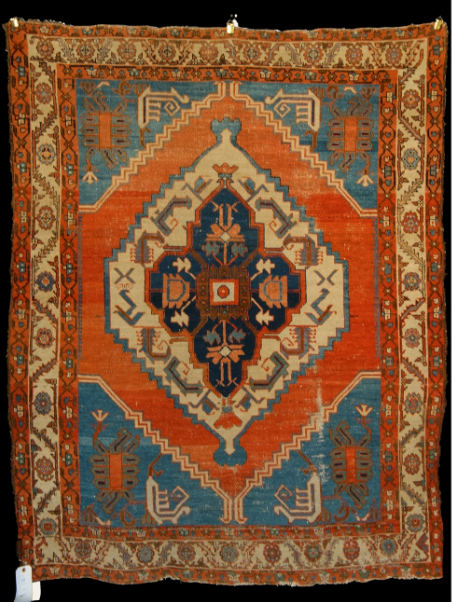
Serapi rugs are distinguished by their bold and striking designs.
Key characteristics include:
They frequently use a rich color palette that includes:
– Deep reds
– Vibrant blues
– Earthy browns
– Accent colors such as ivory and gold
Serapi rugs are handcrafted with high-quality materials, predominantly using durable wool.
Construction details:
– Wool is carefully spun and dyed to enhance longevity and aesthetic appeal
– Rugs are hand-knotted using the Persian knot technique
– The result is a dense, sturdy pile capable of withstanding heavy use while retaining its distinctive appearance.
Size and Shape:
Serapi rugs are available in a range of sizes, including:
– Small area rugs
– Large room-sized pieces
They are typically produced in:
– Rectangular shapes
– Square shapes
Custom shapes may also be created to fit specific design needs.
Quality and Collectability:
Serapi rugs are highly valued for:
Collectors and connoisseurs prize them for their historical significance and distinctive charm.
Due to their craftsmanship and enduring appeal, Serapi rugs are considered valuable investments.
An antique Serapi rug from the 19th or early 20th century is especially prized for its rarity and refined detailing.
Cultural Significance
Serapi rugs are a significant part of Iran’s rich rug-weaving heritage.
They reflect:
A blend of traditional Persian artistry
Regional influences from the Heriz area
These rugs symbolize the artistic ingenuity and historical depth of Persian weaving traditions.
Evolution
Over the years, Serapi rugs have evolved to incorporate both traditional and modern elements.
While maintaining:
Classic geometric designs
Medallion-based compositions
Contemporary Serapi rugs may feature:
Updated color schemes
Innovative patterns
This evolution ensures continued appeal to a wide range of collectors and decorators.
History
The Heriz Region
Forty miles east of Tabriz lies one of Persia's most culturally and artistically significant weaving centers: the Heriz region.
This area is renowned for:
Large, bold designs
Spaciously arranged motifs
A unique carpet style distinct within Persian weaving
Among the finest rugs produced in this region are the Serapi carpets, which stand out due to their finer knotting compared to most other Heriz weavings.
These rugs exude refined elegance while maintaining the geometric robustness for which Heriz carpets are known.
Origin of the Name
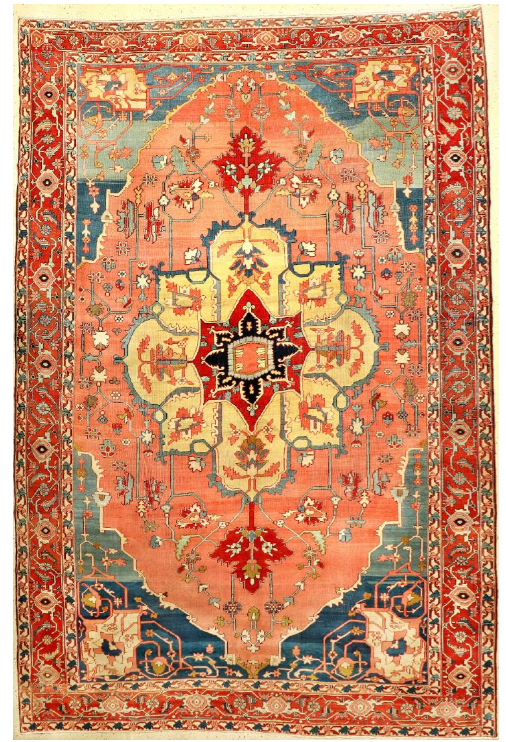
The name “Serapi” is believed to have originated from the term “Serab-i,” meaning “of Serab.”
This refers to:
High-quality Serapi rugs
Historically brought down from the Azerbaijan mountains
Sold in the town of Sarab
Early Production and Collectability
Emerging in the early 1800s, Serapi rugs left an indelible mark on the world of Persian carpets.
Although Serapi carpets are still produced today:
Older examples from the 19th and early 20th centuries are the most sought after
Antique pieces are cherished for exceptional quality and design richness
Their blend of aesthetic beauty and practical durability makes them enduring treasures in both traditional and contemporary settings.
Collectors often distinguish between contemporary pieces and the highly desirable antique Serapi rug examples woven during the height of production.
Design Transformation
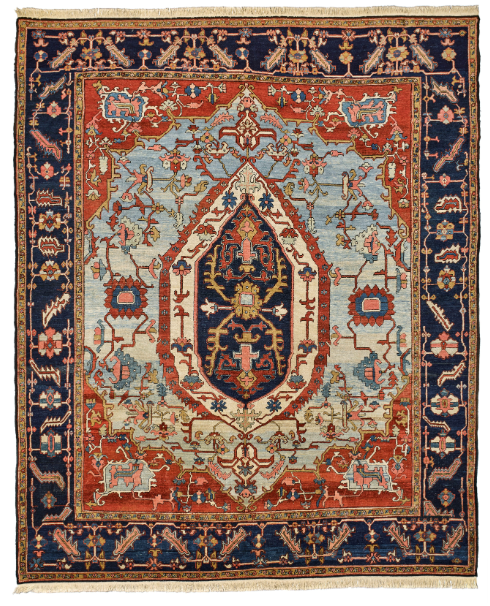
Heriz-area weavers took curvilinear designs and discretized them into geometric forms.
This process:
Created a niche style that was simple yet elegant
Reduced the knot count required to achieve the overall pattern
Allowed more carpets to be produced efficiently
Despite this, Serapi rugs maintained high knot counts as a sign of quality.
A limited palette of fewer than 20 colors produced carpets capable of blending with:
New furniture
Antique furniture
Serapi became the most dominant Persian carpet type in North America, earning this reputation for a very good reason.
Craft and Creation
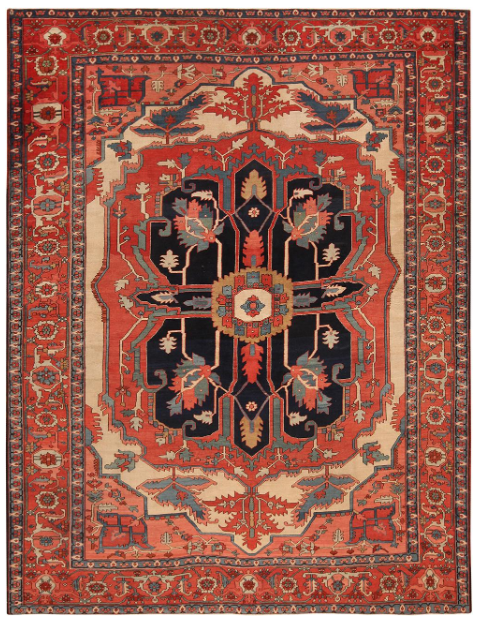
Serapi rugs represent the culmination of various cultural influences and design traditions tied to the Heriz region and neighboring areas.
Unlike mass-produced rugs:
True Serapis were crafted in private homes or small workshops
Often created as commissioned pieces or creative endeavors
The weaving process was predominantly carried out by local women, who:
Incorporated elements from nature
Spontaneously added imaginative details
Materials and Dyes
The vibrant colors of Serapi rugs were derived from:
Carefully selected natural vegetable dyes
Undyed wool used occasionally for contrast
These material choices reflect a deep connection between weavers and their surroundings, making each Serapi rug a unique work of art.
Wool and Rarity
The finest wool in Azerbaijan comes from the Karakul sheep, prized for:
Silky texture
Remarkable durability
This wool contributes directly to the longevity and resilience of Serapi rugs.
Serapi carpets woven before 1850 are especially rare:
Early examples seldom appear on the market
When they do, they command premium prices
Smaller pieces are particularly prized for scarcity and exclusivity
Enduring Legacy
Serapi rugs merge artistic expression with centuries-old Persian weaving techniques.
They often feature:
Geometric medallions
Intricate border designs
Natural dyes that create a time-worn charm
Owning a Serapi rug is like possessing a piece of history.
Each rug tells a story that interweaves craftsmanship, culture, and enduring beauty.
Their rarity, unparalleled quality, and cultural depth ensure that Serapi rugs remain extraordinary investments that continue to appreciate over time.