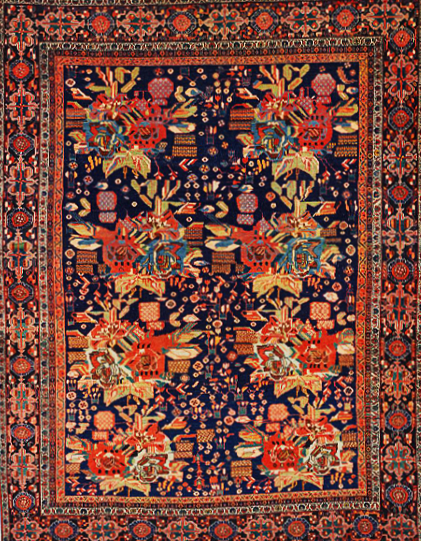
The geometric Afshar pieces appearing further down the page reflect this strength: tight knots, durable wool, and crisp, readable designs. These were rugs meant to be used, moved, and trusted, hallmarks of durable Afshar carpets.
Even as many Afshar families settled into villages, their weaving carried the same identity. Modern Afshar pieces may be slightly larger or feature more refined elements, but the heart remains tribal, bold patterns, warm colors, and a direct link to their history through Afshar rugs.
Afshar rugs are admired not for extravagance, but for honesty. They feel genuine because they are woven without pretense for real homes, real families, and real lives. Every rug on this page carries that truth: individuality, character, and authenticity that cannot be replicated in commercial weaving or mass-produced carpets, reinforcing the enduring appeal of Afshar rugs.
The Afshar people historically lived across changing landscapes, and their weaving traditions developed alongside a mobile way of life. Rugs were made to serve everyday needs while remaining practical enough to move from place to place.
This way of living helped shape many traditional Afshar rugs: compact in scale, strongly constructed, and designed to combine usefulness with skilled craftsmanship.
That practical purpose continued to influence the way Afshar rugs were made. Their manageable proportions and sturdy construction suited interiors where woven pieces needed to be both functional and long-lasting.
At the same time, practicality never meant sacrificing detail. Afshar weavers brought care and individuality to each piece, creating rugs that could withstand everyday use while remaining distinctive works of craftsmanship.
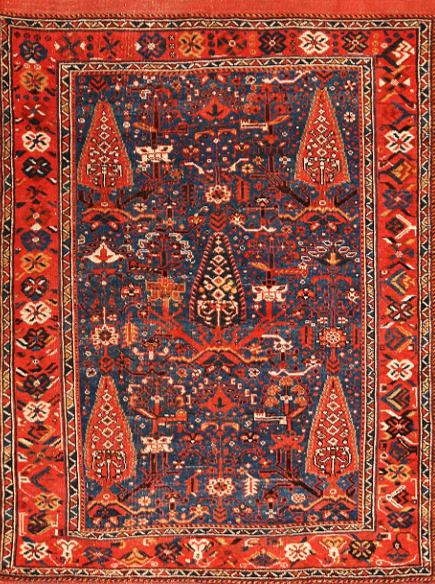
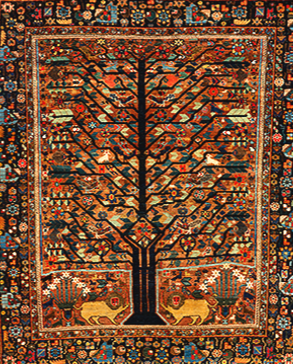
Afshar weavers often drew directly from nature. Cypress trees, flowers, and fields appeared in their designs because they appeared in their daily lives.
The cypress forest rug beside this text shows exactly how the tribe translated the landscape into pattern, a rhythmic, grounded depiction of the world outside their tents, characteristic of many Afshar carpets.
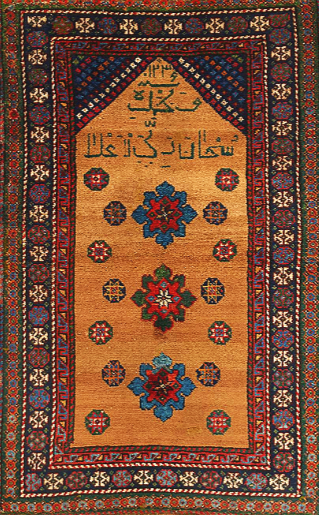
Some Afshar pieces, like the Mehrab rug shown here, carry spiritual architecture within their borders. These designs show the weaver’s ability to combine tribal identity with influences from settled Persian culture.
The geometry is clean, the colors intentional, and the workmanship unmistakably Afshar, reflecting the clarity seen in classic Afshar rugs.
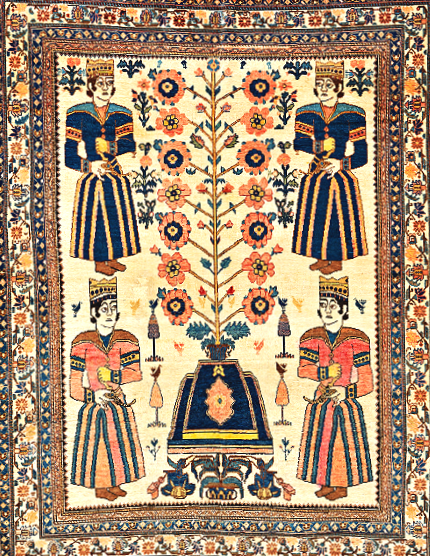
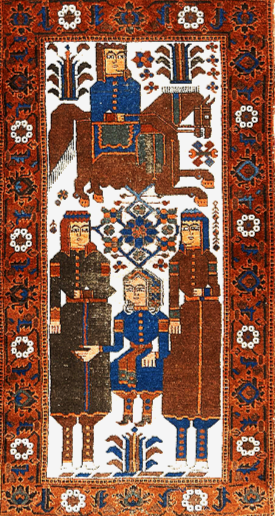
Unlike city carpets, many Afshar rugs portray scenes from everyday life.
Look at the family-portrait rug on this page, figures standing proudly, surrounded by symbols of abundance and protection. These pieces are windows into tribal culture, where weaving served as both art and record, a quality that defines authentic Afshar carpets.
Tree-of-life rugs, like the one displayed here, show the Afshar connection to growth, protection, and continuity. Other pieces include boteh motifs, medallions, animals, or geometric forms, each one tied to ideas of fertility, movement, or the cycles of life found throughout Afshar rugs.